
East Antarctica—Ross Sea—2027

28-day trip
and 27 nights

From €31 935
per person

Polar ship
The Heritage Adventurer


Comfort
4 stars

Activities
Wildlife viewing, Zodiac cruises

Difficulty
Easy

Temperature
0° on average

Kilometres
6700
Ice as far as the eye can see
Come aboard the Heritage Adventurer for a comprehensive journey into the heart of New Zealand and Australia’s sub-Antarctic islands to discover their millions of penguins and spectacular volcanic landscapes.
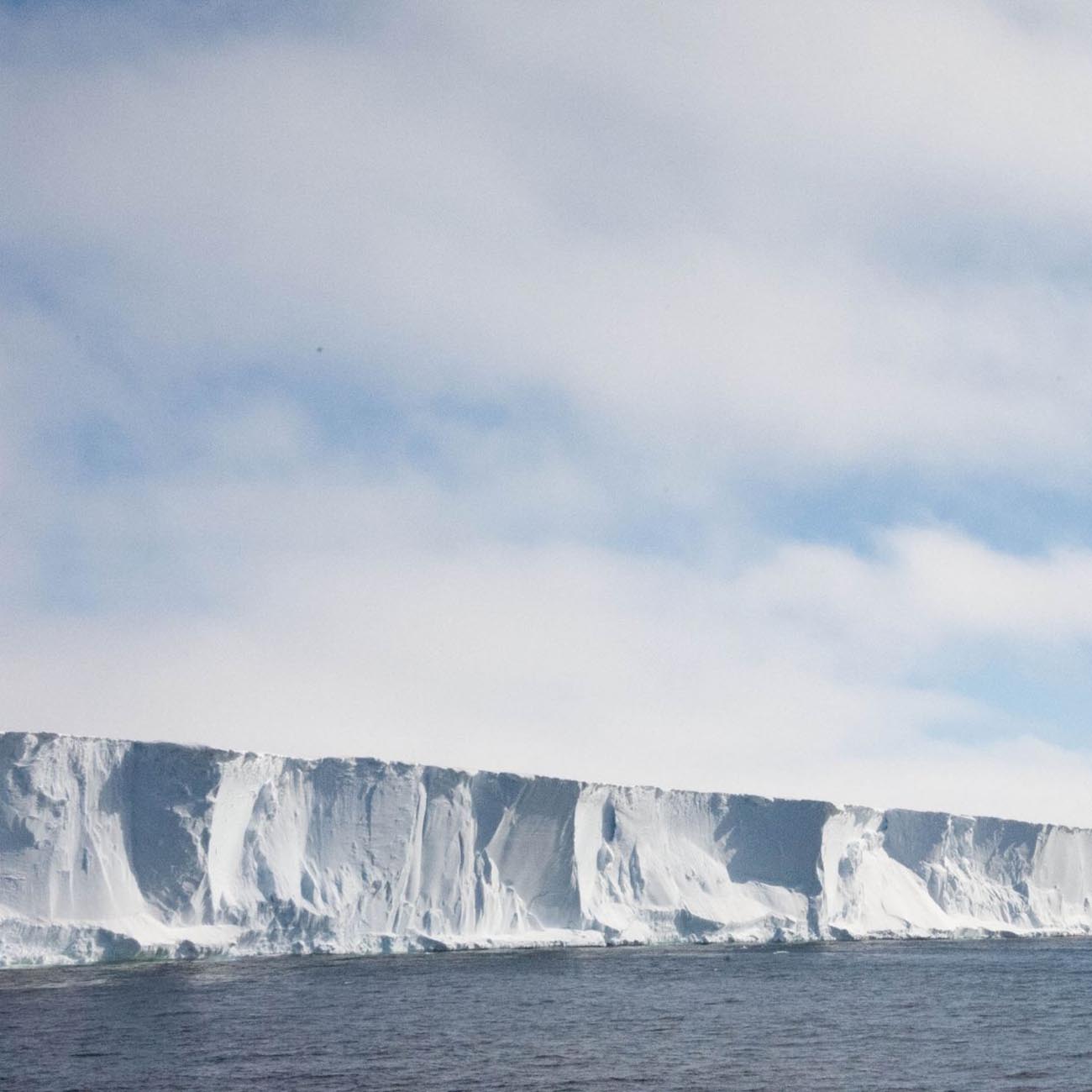
Sail past ice fields, ice caps, glaciers, pack ice, giant icebergs, and the immense Ross Ice Shelf—the world’s largest ice front.
A month-long journey to the land of the penguins, including 10 days in the Ross Sea aboard a legendary ship, where we’ll visit polar stations, huts, and base camps from the heroic era of the conquest of the South Pole.
January 6–February 2, 2027
February 1–28, 2027
Starting at €31,935* per person
English-speaking cruise, Grands Espaces group, and French-speaking guide(s). For these exceptional one-month cruises to the Antipodes, in the most remote and inaccessible regions of Antarctica—at the very ends of the earth that remain largely unexplored— we have chosen a larger (135 passengers instead of 100) and more spacious ship for your comfort.
*The price may be adjusted upward depending on the exchange rate at the time the balance is due.

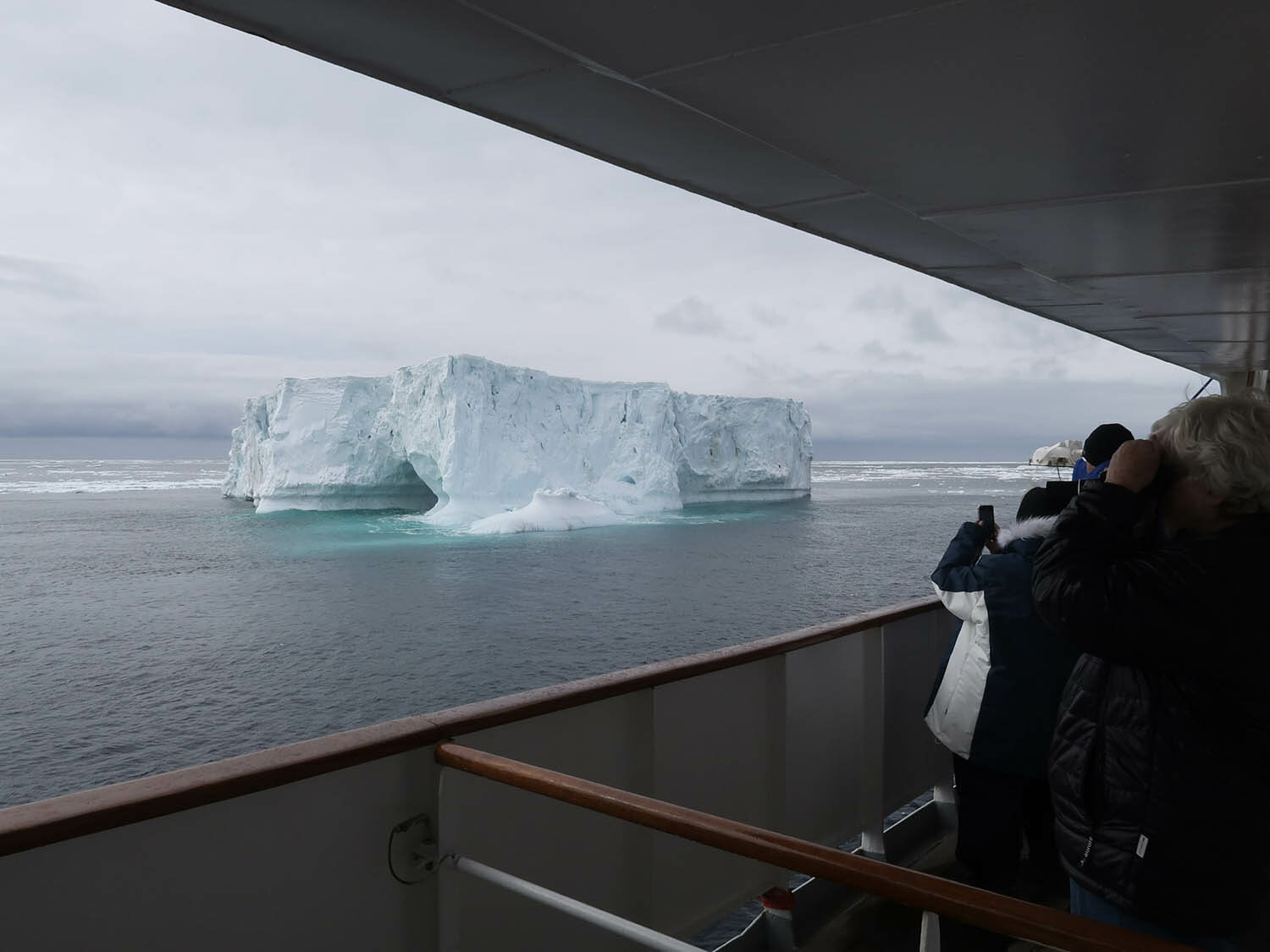
Ice as far as the eye can see
Come aboard the Heritage Adventurer for a comprehensive journey into the heart of New Zealand and Australia’s sub-Antarctic islands to discover their millions of penguins and spectacular volcanic landscapes.
Sail past ice fields, ice caps, glaciers, pack ice, giant icebergs, and the immense Ross Ice Shelf—the world’s largest ice front.
A month-long journey to the land of the penguins, including 10 days in the Ross Sea aboard a legendary ship, where we’ll visit polar stations, huts, and base camps from the heroic era of the conquest of the South Pole.
January 6–February 2, 2027
February 1–28, 2027
Starting at €31,935* per person
English-speaking cruise, Grands Espaces group, and French-speaking guide(s). For these exceptional one-month cruises to the Antipodes, in the most remote and inaccessible regions of Antarctica—at the very ends of the earth that remain largely unexplored— we have chosen a larger (135 passengers instead of 100) and more spacious ship for your comfort.
*The price may be adjusted upward depending on the exchange rate at the time the balance is due.
Highlights of your trip
Queenstown, New Zealand
This city is the capital of New Zealand’s Alps, the heart of a rich and famous sheep-farming region. We’ll meet at the hotel in the late afternoon for an initial meeting and a meal with all the participants.
See the itinerary on the map
Bluff
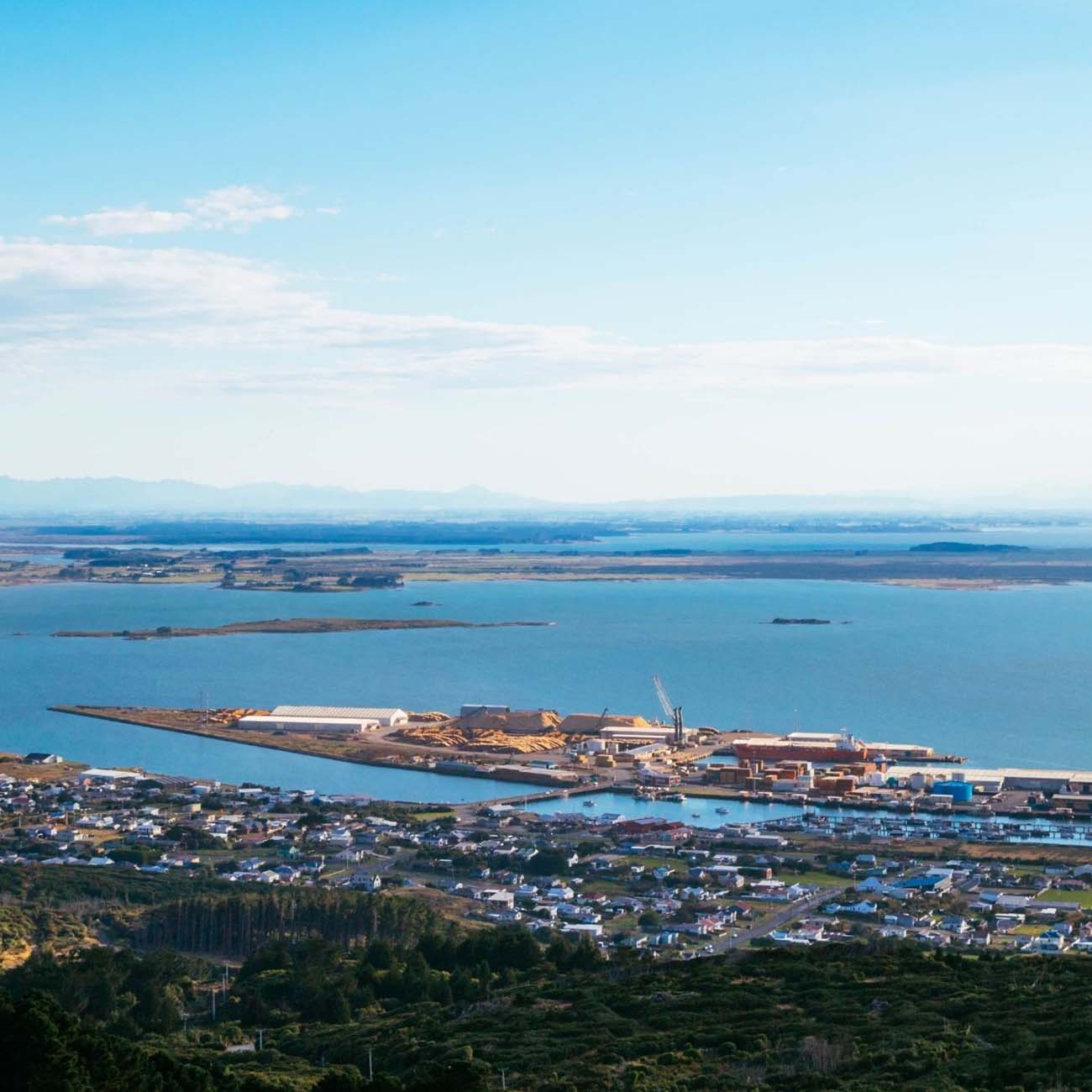
A quiet morning during which you can visit the Subantarctic Museum before boarding. You’ll have time to settle into your cabin, explore the ship, and attend an introductory briefing on board with your captain and the expedition team.
See the itinerary on the map
Snares Islands
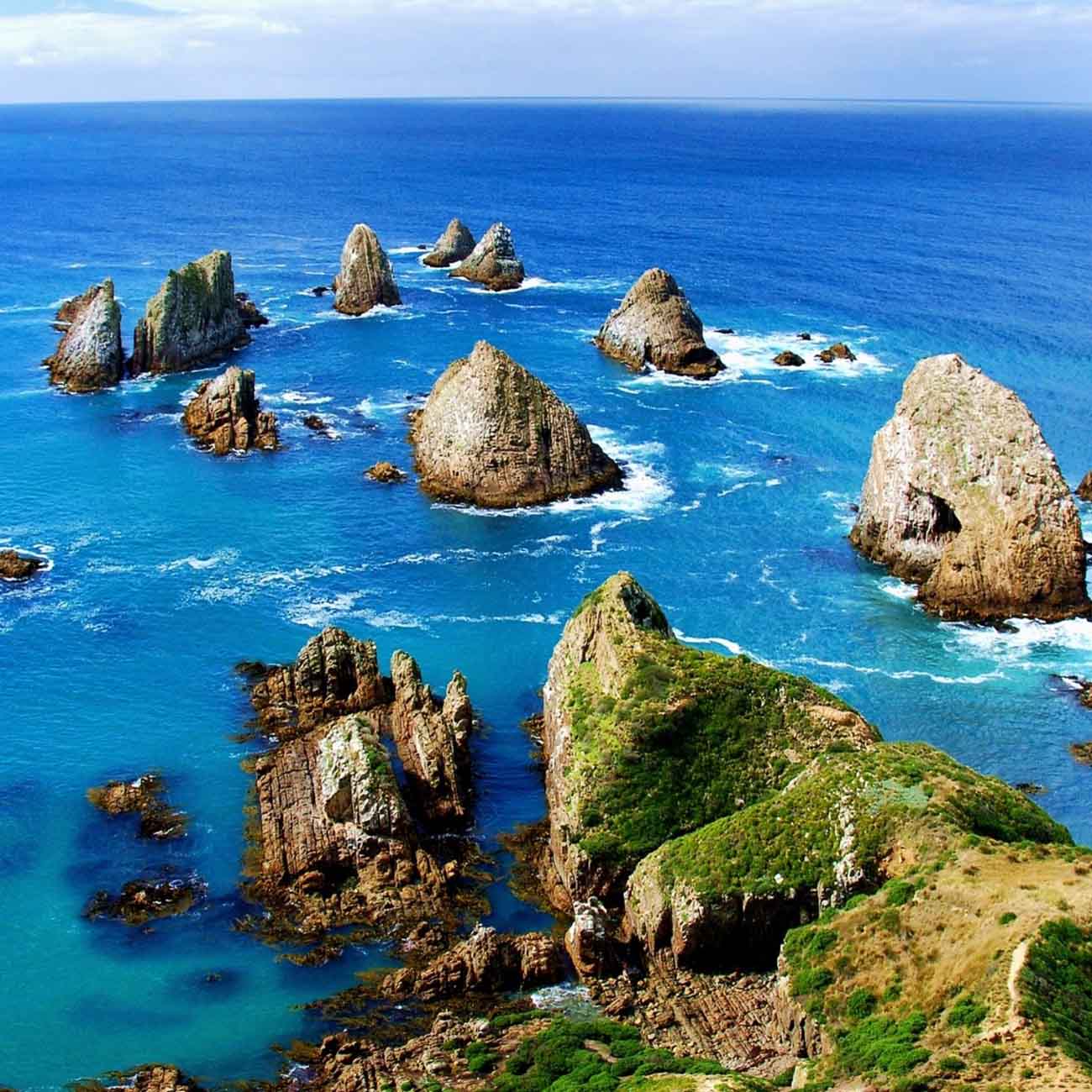
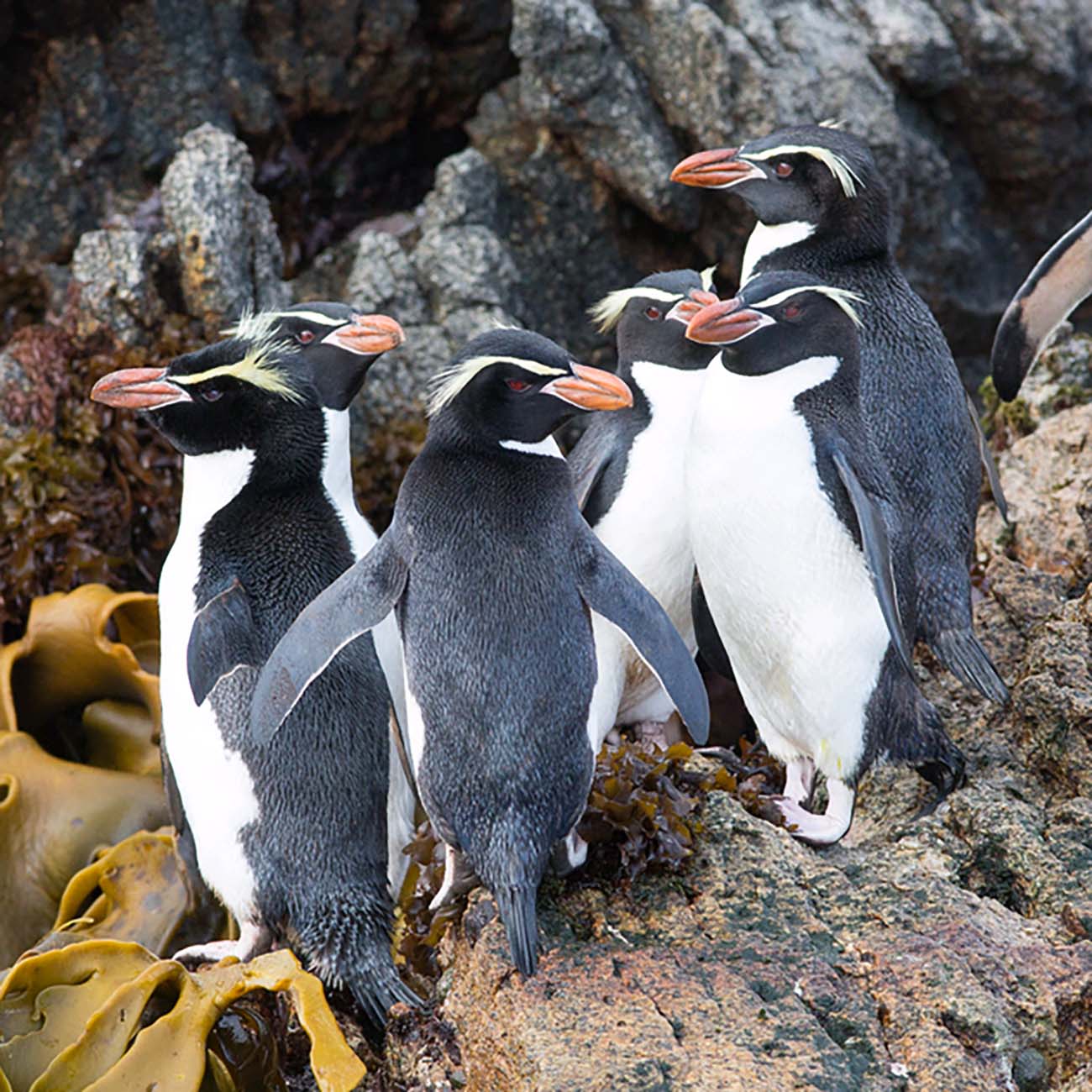
These sub-Antarctic islands, the closest to New Zealand, were discovered in 1795 and consist of two large islands and numerous uninhabited islets, all designated as nature reserves. Zodiac cruises along the coast, sheltered from the swells, allow visitors to discover endemic penguin species and abundant birdlife in the bays. Hundreds of thousands of puffins nest there, as do rare albatrosses and several other bird species.
See the itinerary on the map
Auckland Islands
Two ancient, eroded volcanoes form the foundation of these islands, with their towering cliffs and rocks steeped in stories of shipwrecks… Today, this caldera has been shattered by the waves. A site rich in history.
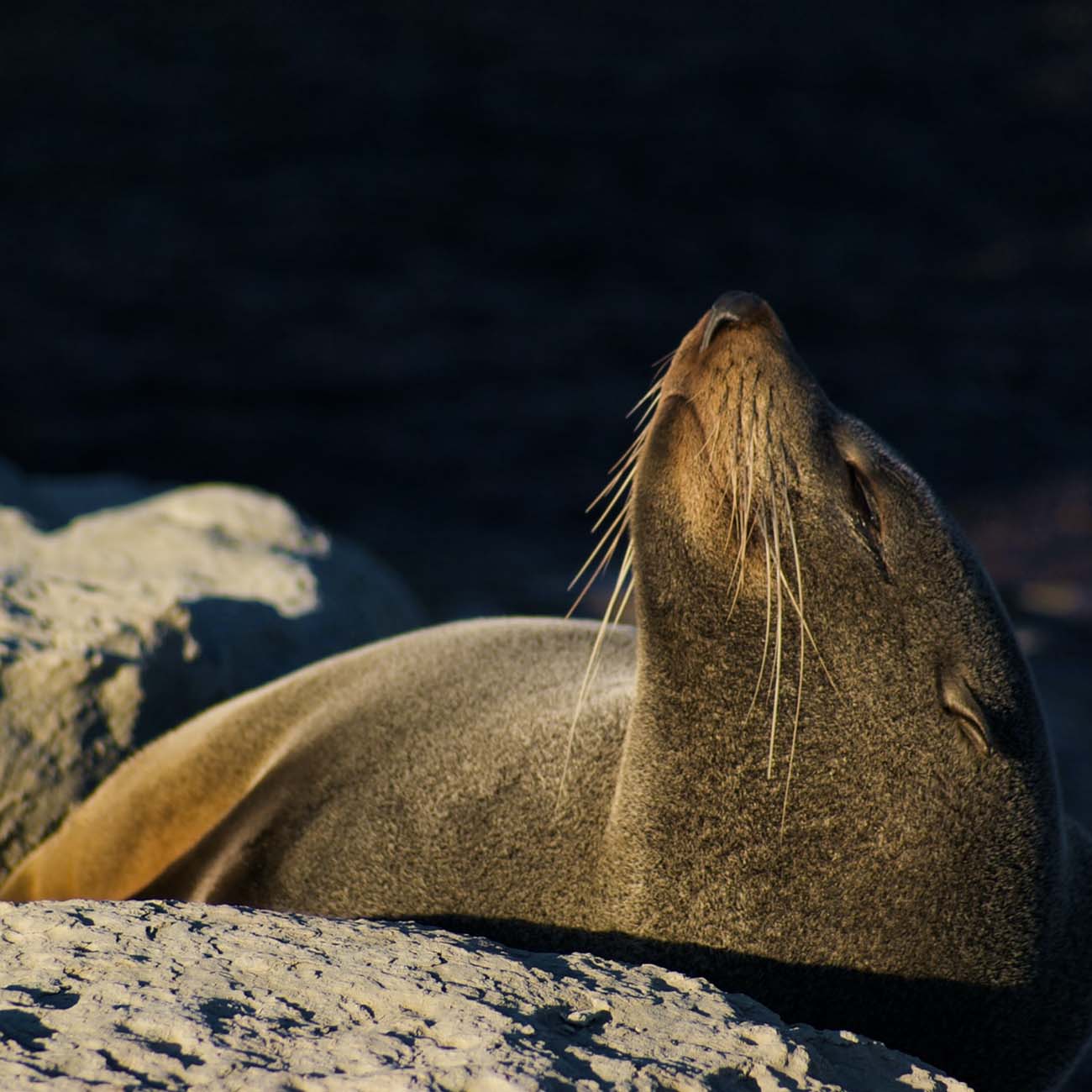
Take an excursion to an albatross colony, or a Zodiac cruise to the wild coastlines with their historical relics dating from 1800 to 1865.
See the itinerary on the map
At sea
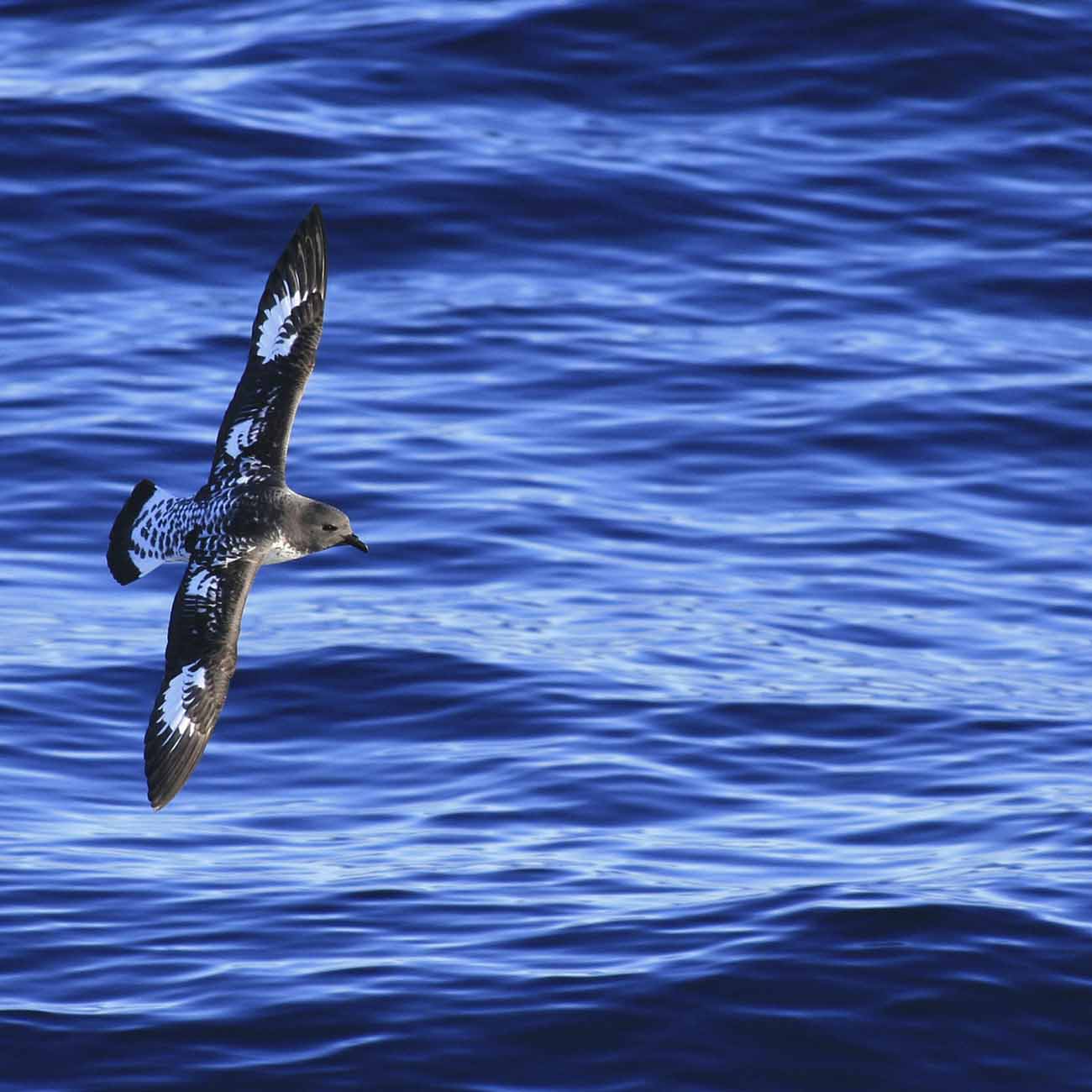
This is an opportunity to attend lectures on the islands and oceans of the South. From the decks, we’ll be able to look for seabirds: royal albatrosses, howler albatrosses, gray-headed albatrosses, brown-browed albatrosses, sooty albatrosses, and various other species, as well as petrels...
See the itinerary on the map
Days 6 and 7: Macquarie Islands
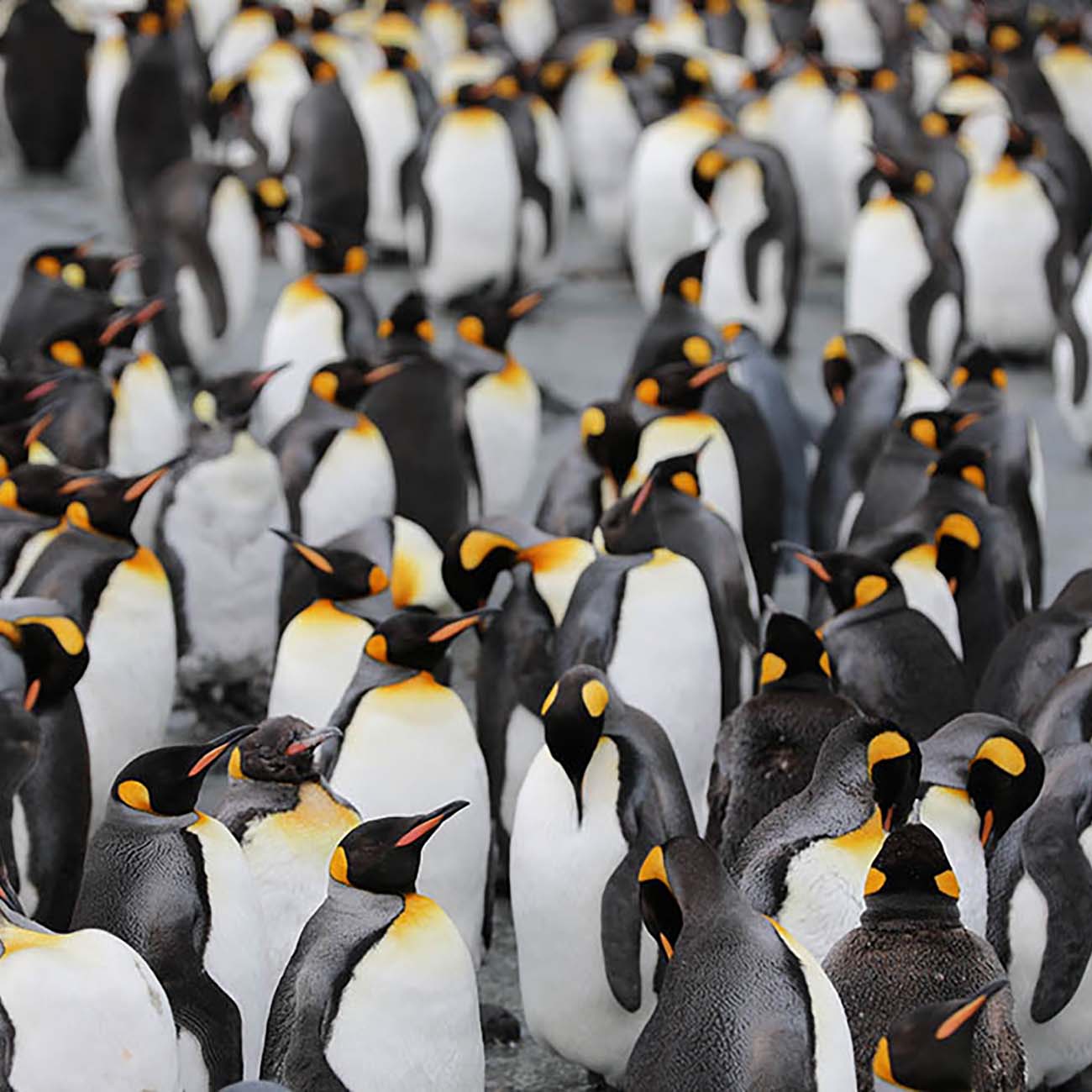
An Australian natural paradise, home to one of the highest concentrations of birds in the Southern Hemisphere: 55 seabird species and 80 landbird species, 30 of which are endangered. Millions of penguins belonging to four species—king, rockhopper, gentoo, and Schlegel’s—breed here, and we’ll spend our time between the two sites open to visitors: Sandy Bay and Lusitania Bay. Zodiac cruises will be offered weather permitting. At Sandy Bay, between 850,000 and 3 million gorfous nest. Members of the Australian research station will guide us, while on the beaches, Southern elephant seals lounge in tangled masses. A quarter of a million penguins watch you as you disembark...
See the itinerary on the map
Days 8–10: At Sea
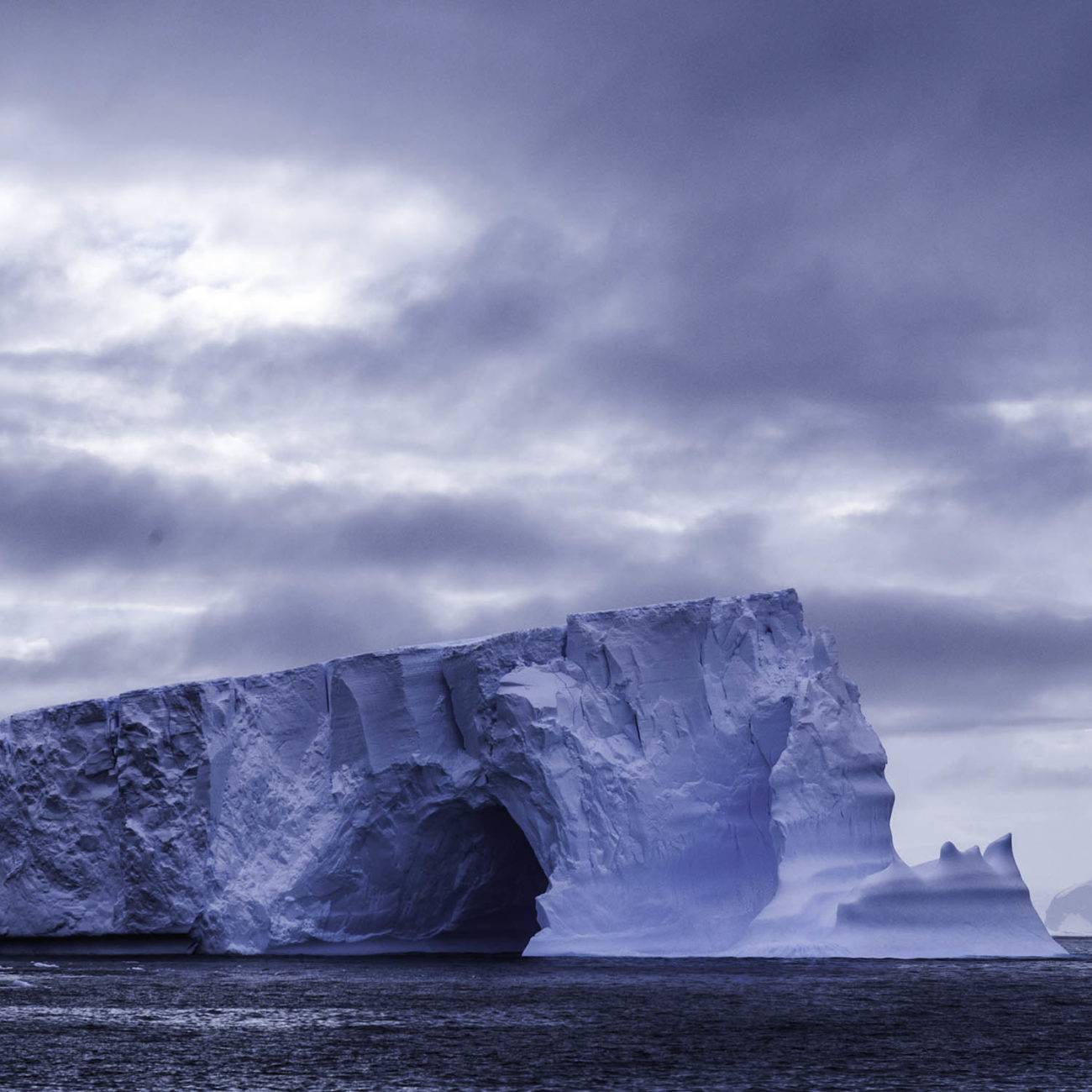
Petrels and albatrosses accompany us as our guides introduce you to the Antarctic continent. After crossing the Antarctic Convergence, the waters are significantly colder, the birdlife becomes more abundant, and the first giant icebergs drift by, while daylight now reigns 24 hours a day.
See the itinerary on the map
Days 11–22: 11 days in the Ross Sea
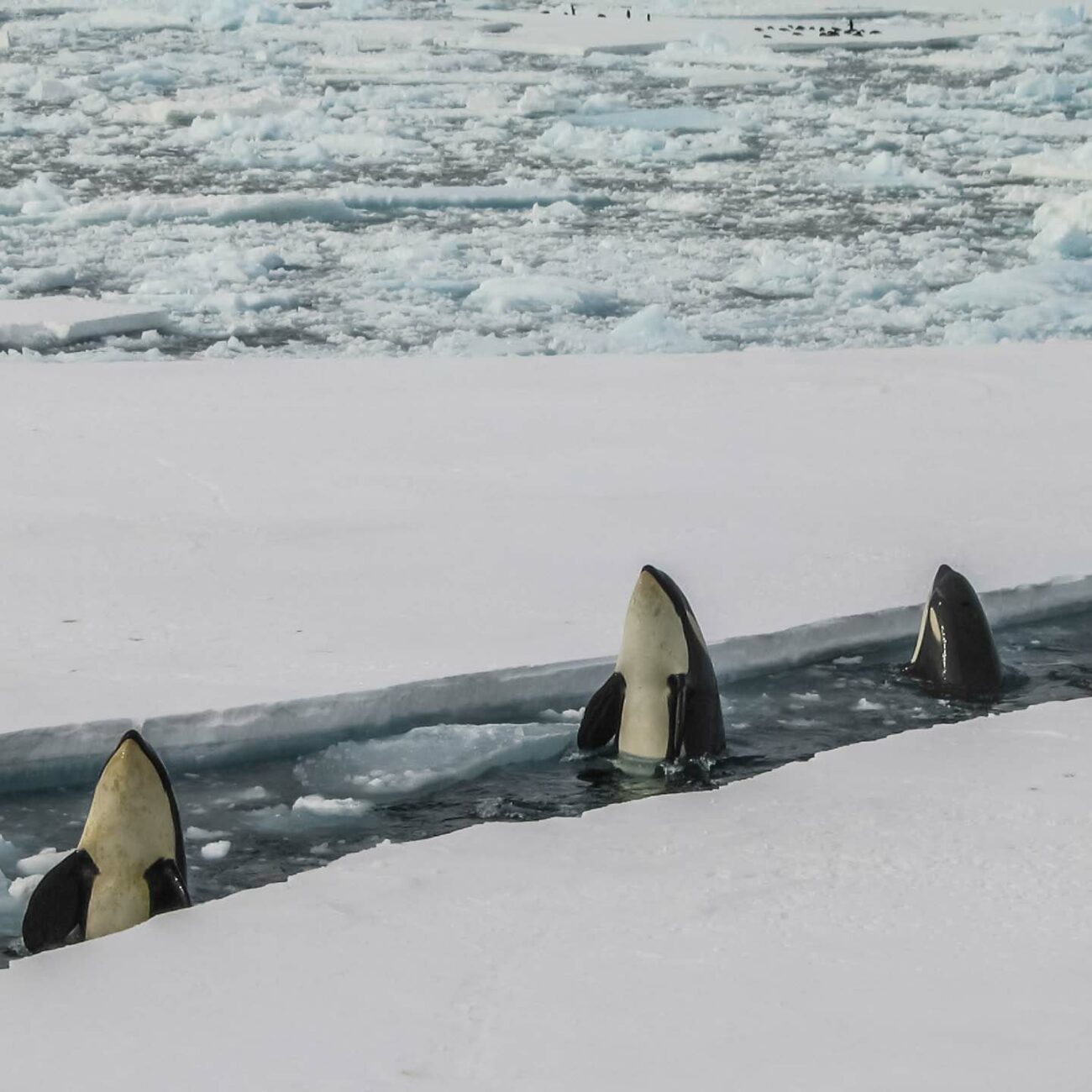
In this world of giant icebergs, ice caps, pack ice, and largely unexplored coastlines, we will make stops depending on ice, sea, and weather conditions, with several objectives in mind.
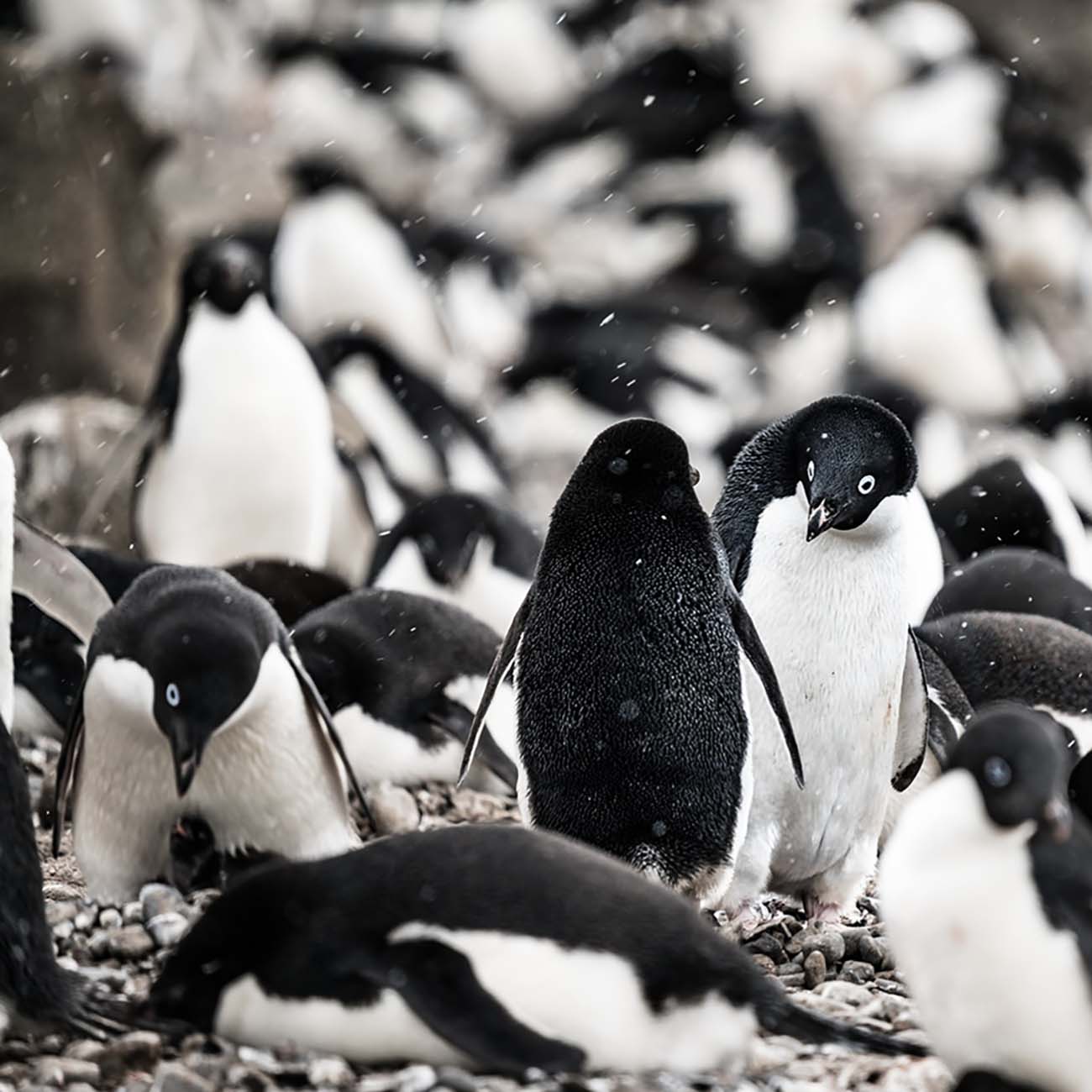
- Cape Adare: The largest Adélie penguin colony on the Antarctic continent, with over one million birds. It is also at this cape that we will visit the continent’s oldest exploration hut, the Borchgrevink Hut (1899).
- Cape Hallett: A particularly impressive landscape featuring towering, steep mountains and gigantic glaciers. We’ll visit the abandoned American and New Zealand research stations.
- Franklin and Possession Islands: Very large penguin colonies set against extraordinary backdrops.
See the itinerary on the map
Days 13–22 (continued): 10 days in the Ross Sea
- The Ross Ice Shelf, the largest ice shelf in Antarctica, stretching 800 kilometers with an average vertical drop of 30 meters, and constituting the world’s largest mass of floating ice: a land of superlatives: we’ll be just 1,287 km from the South Pole.
- Ross Island, Mount Erebus: Mount Erebus, at 3,794 meters, is a volcano surrounded by ice. A New Zealand research station is located there, and we’ll visit the historic huts from the heroic era of Shackleton’s 1907–1909 expedition and Scott’s 1911 expedition—legendary explorations! Bird colonies and seals thrive in these areas.
See the itinerary on the map
Days 13–22 (continued): 10 days in the Ross Sea
- The McMurdo and Scott scientific bases: The large U.S. McMurdo base can accommodate nearly 1,300 people. The Scott Station (New Zealand) is located 5 km away. Depending on logistical operations and ice conditions, we may or may not be able to disembark at this true Antarctic hub.
- Terra Nova: Visit to the Italian station, located near the South Korean, German, and Chinese stations.
See the itinerary on the map
Days 23–25: At sea
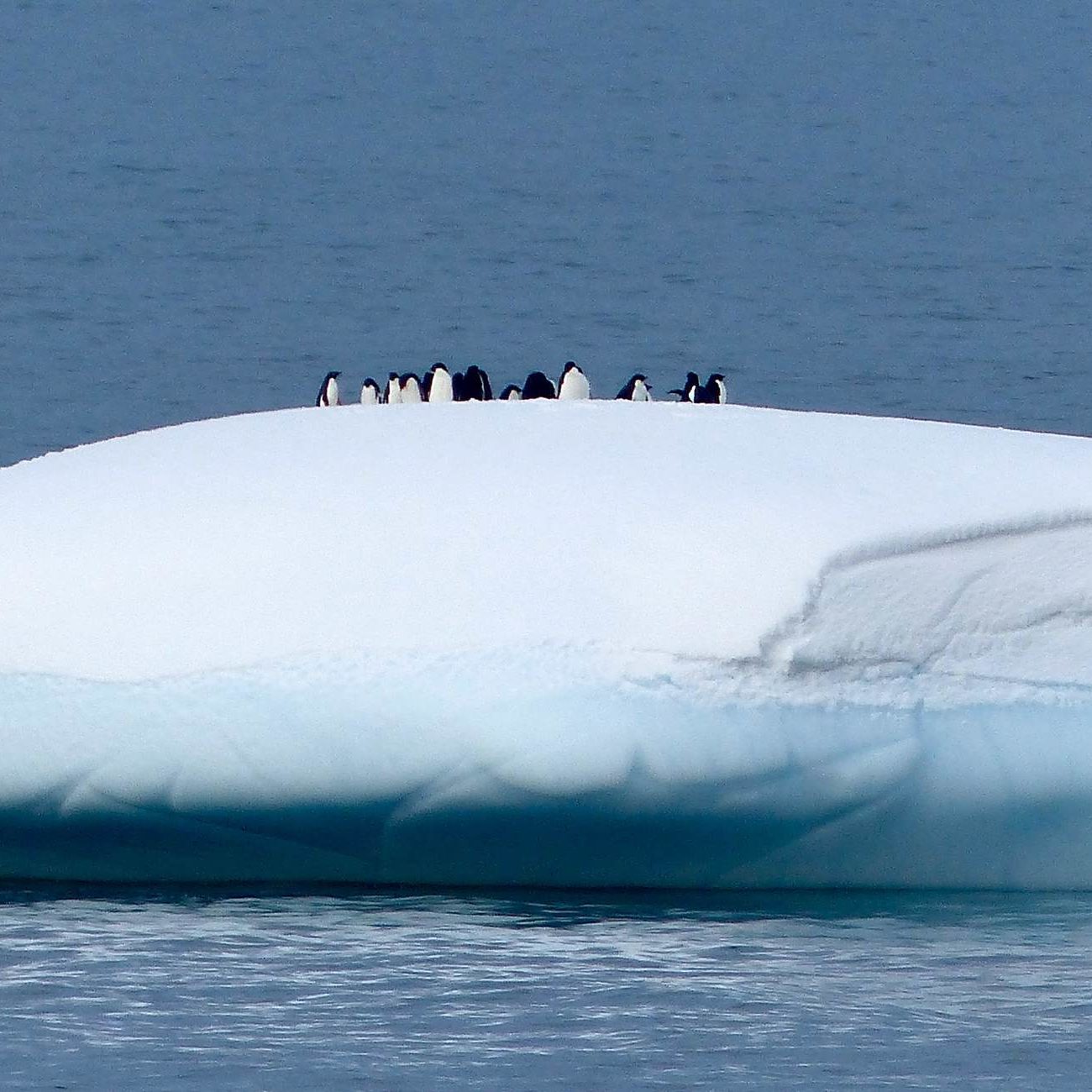
Lectures on the exploration of the Southern Oceans and the Antarctic continent will punctuate our days. When we leave the icy shores of the Great White Continent behind, the albatrosses and petrels will follow us once again.
See the itinerary on the map
Day 26: Campbell Island – Perseverance Harbor
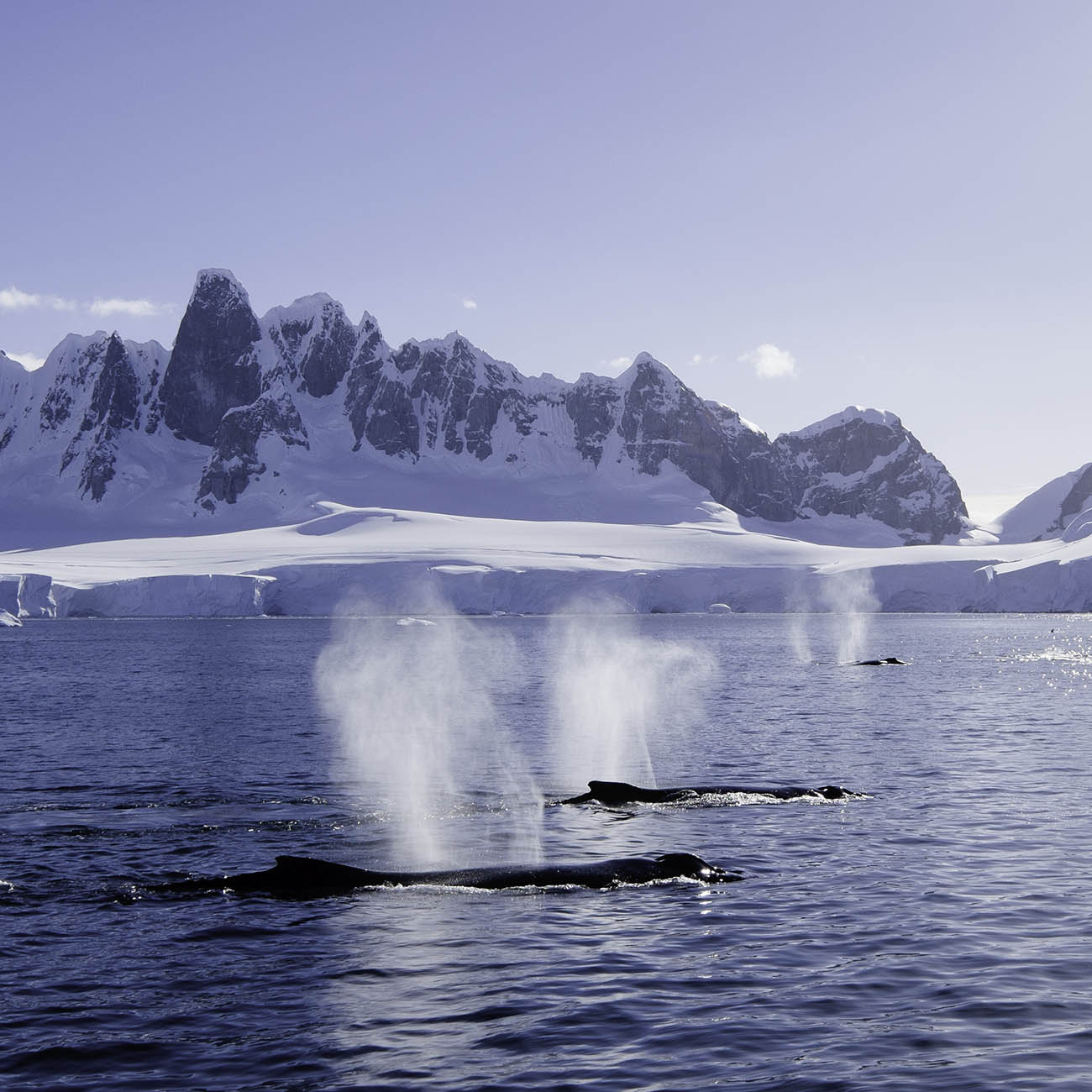
We arrive in New Zealand’s southernmost territory, 660 kilometers south of Bluff. In this archipelago at the end of the world, we’ll visit Perseverance Harbor, known for its flora and fauna. Right whales give birth here, and cormorants, petrels, penguins, and sea lions will surround us as we explore the abandoned ruins of a research station. The highlight of our visit is the hike up the island to discover a colony of 6,000 pairs of royal albatrosses.
See the itinerary on the map
At Sea Toward New Zealand
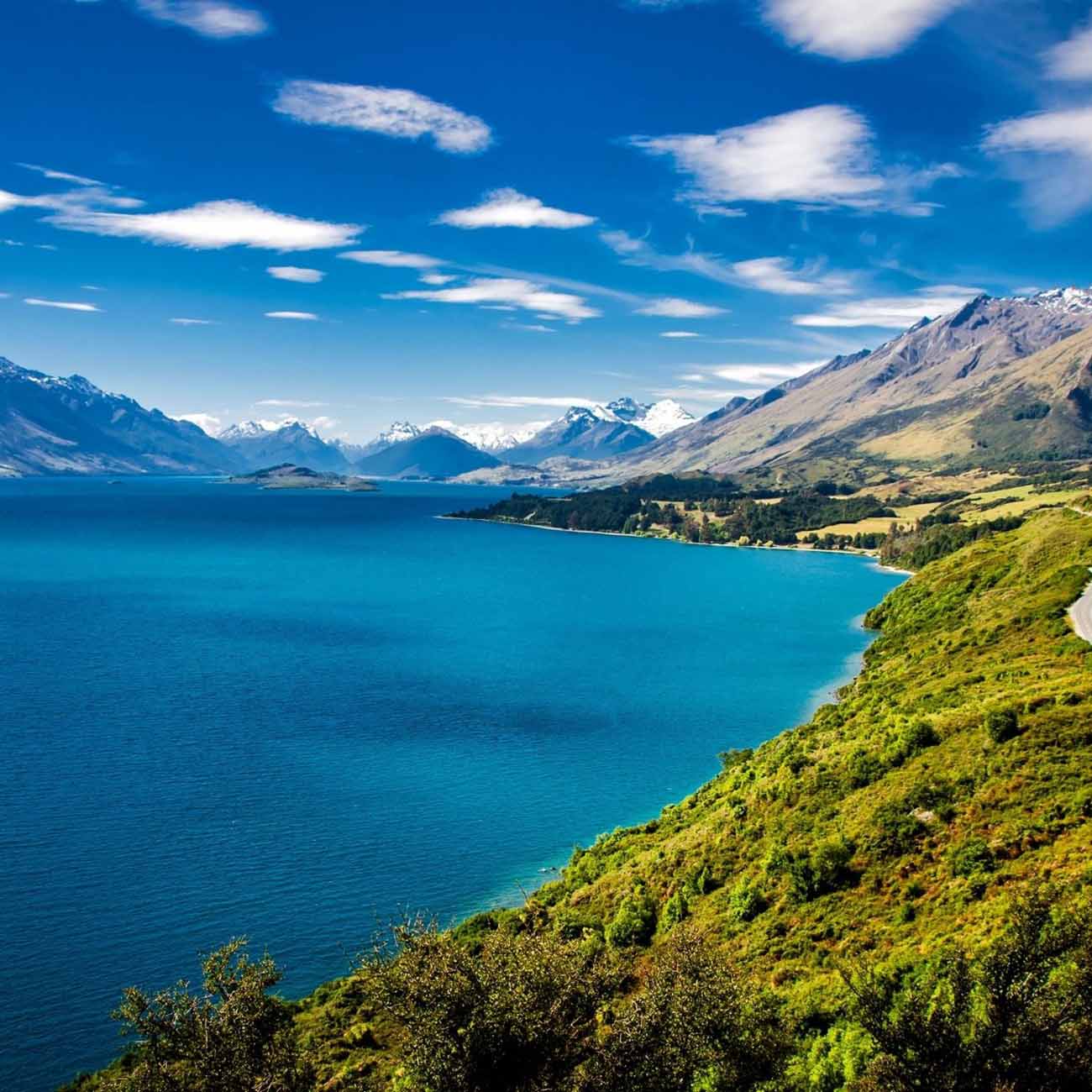
Throughout the day, we’ll be out on deck watching pelagic birds. Farewell dinner, then we’ll head to the port of disembarkation.
See the itinerary on the map
Invercargill - Queenstown
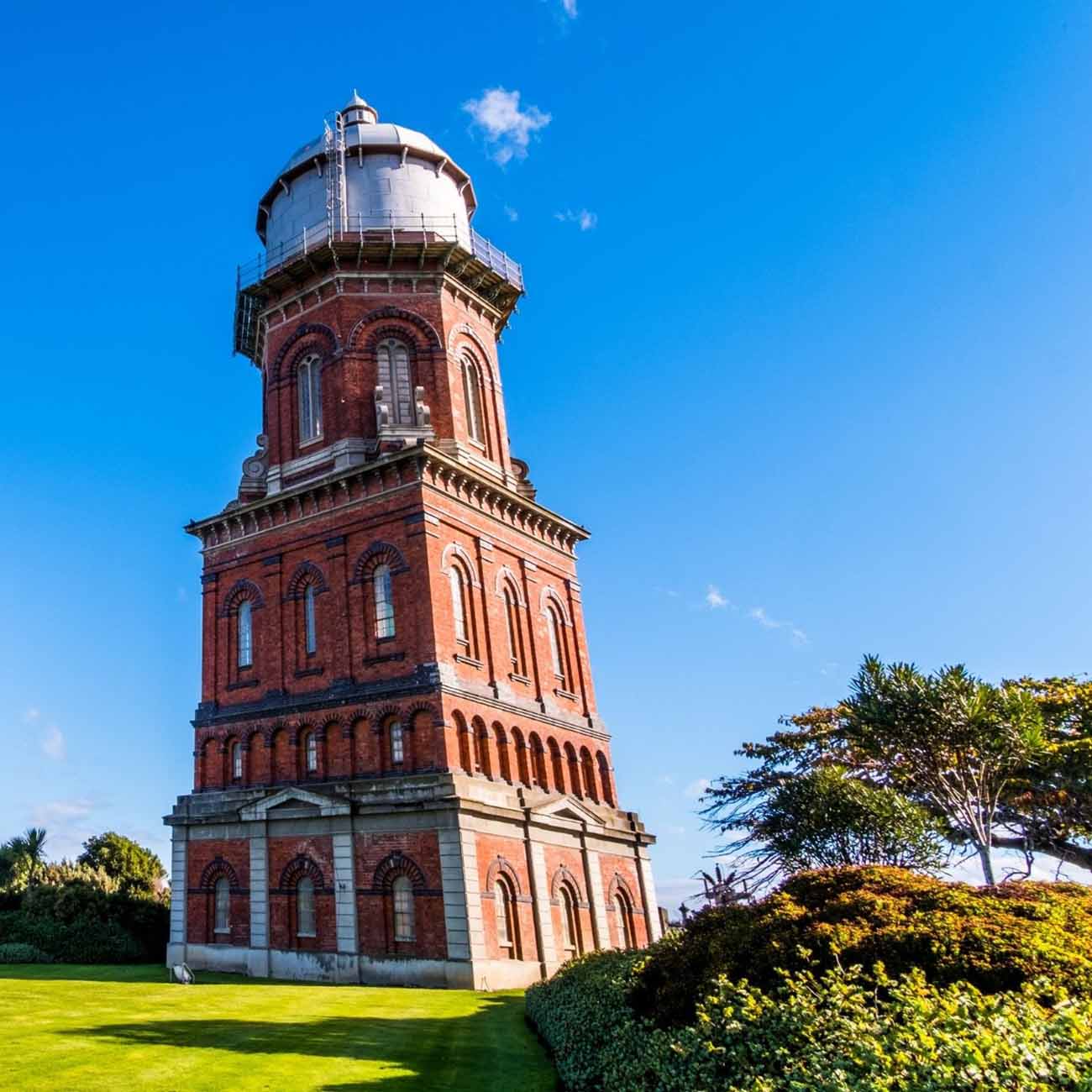
We arrive in Bluff early in the morning. After going through police and customs formalities, we’ll take a bus to downtown or the airport.
See the itinerary on the map
Extensions and options for your trip
New Zealand
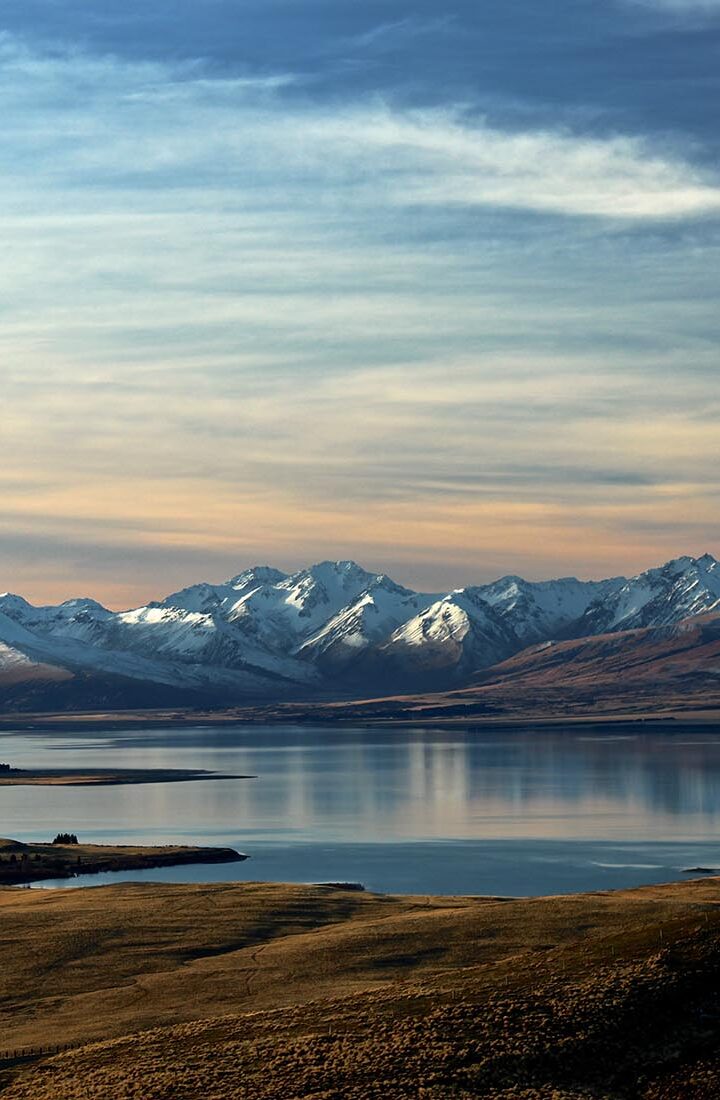
Located in the heart of Oceania, New Zealand is one of the most recently colonized lands discovered by humans, with the arrival of the Māori between 1050 and 1300, followed by Europeans in 1642. The country is defined by the North Island, with its volcanic origins and rugged terrain, which captivated the director of “The Lord of the Rings.” The South Island is mountainous, with 18 peaks over 3,000 meters in elevation. Spanning climates from subtropical to sub-Antarctic, it is a country of extraordinary diversity, from sandy beaches to glacial lakes, from caves to fjords. This variety of landscapes and the country’s isolation have allowed for the development of unique, endemic flora and fauna, such as giant ferns and kiwis. The country has a population of 4 million and boasts rich agricultural resources (sheep, wine, fishing, etc.).
Price per person (double room): 6,900 €
Single supplement: 1,320 €
(minimum of 12 participants)
Prices include: the flight between Queenstown and Auckland on Day 1, all listed activities, bus transportation, hotels, meals, airport transfers, the services of a French-speaking guide, and repatriation insurance.
Prices do not include: comprehensive insurance, the optional helicopter tour, beverages, tips, and personal extras.
New Zealand Extension
Day 1: Queenstown – Auckland
The “sailing capital” is so named because of the number of sailboats moored in Waitemata Harbor. Explore the city, learn about Maori culture, and visit the Waitakere Forest and One Tree Hill. Overnight at the Hilton Hotel.
Day 2: Waitomo Caves – Rotorua
Depart by bus for the volcanic region of Rotorua; take a walk through the extraordinary Waitomo Caves, then visit Te Puia, the Maori cultural center, and Whakarewarewa with its volcanic activity—geysers, solfataras, and mud pots… Overnight at the Peppers on the Point Hotel or similar.
Day 3: Rotorua
Explore the volcanic landscapes of Rotorua and Waimangu with its lakes; in the afternoon, head to the northern volcanic plateau, the shores of Lake Taupo, and the protected area near the three peaks of Tongarino, Ngurahoe, and Ruapehu, which gave rise to the country’s first national park. Overnight at the Tongarino Hotel.
Day 4: Tongarino – Wellington
Explore Tongariro National Park, then drive to Ohakune and the fertile plains of the Manawatu region, learning about the history of the European pioneers. Arrive in Wellington, the country’s administrative capital; evening excursion to Zelandia Island in search of kiwis.
Day 5: Wellington – Picton
Visit the New Zealand Museum and cross to the South Island via the ferry through the Queen Charlotte Sound and Marlborough Sound. Visit a vineyard and winery with a tasting of local wines. Enjoy a local dinner in Marlborough. Overnight at the Marlborough Hotel or similar.
Day 6: Blenheim and Christchurch
Observe sea lion colonies in Kaikoura, then drive through the lush green landscapes of the Canterbury Plains. Guided tour of the Antarctic Museum. Evening at a bar once frequented by polar explorers Scott and Shackleton during their stays in the area. Overnight at the George Hotel or similar in Christchurch.
Day 7: Christchurch – Akaroa
Visit the ports of Lytteltown and Akaroa, where French settlers left their mark on the area. Amid these volcanic landscapes, we’ll head out to observe white-flippered penguins in the Pohatu Reserve. Overnight at the George Hotel or similar in Christchurch.
Day 8: Mount Cook, New Zealand Alps – Franz Josef
We’ll cross the Southern Alps via Arthur Pass to reach the spectacular Franz Josef Glacier, which flows down from Mount Cook into the valley. Overnight at the Franz Josef Hotel or similar.
Day 9: New Zealand Alps
Optional morning helicopter excursion to be dropped off at high altitude on the glacial plateau at the foot of the country’s highest peak. Visit the landscapes around Lake Moeraki and then Haast Pass. It is in this region that we will look for kea parrots and kiwis. Drive to Queenstown. Overnight at the Millennium Hotel or similar.
Day 10: Milford Sound
One of the most famous fjords in the country and the world, which we’ll reach by plane for a cruise through the spectacular scenery. The region is very humid, with over 7 meters of rainfall per year, allowing for lush vegetation and spectacular waterfalls. Marine wildlife is abundant here, including one of the world’s rarest penguin species. Overnight at the Millennium Hotel or similar in Queenstown.
Day 11: Queenstown.
Return flights to Europe.
ACTIVITIES
- Hiking
- Zodiac Excursions
- Wildlife Viewing
CLIMATE
- Variable climate
- Temperatures range from -5° to +10°C.
FORMALITIES
For European/Swiss nationals: Passport valid for 6 months after the return date.
ADDITIONAL INFORMATION
- A practical guide will be sent to registered participants.
- During our expedition cruises, ice conditions and weather may require us to change or reverse the itinerary. Flexibility is key on a trip like this.
You’re about to set off for the ends of the earth, the Antipodes, and one of the least-known regions on Earth. So we’ll be with you every step of the way in the months leading up to the trip, as well as, of course, during the trip itself and its extension.
The Office
One person is specifically in charge of this trip: Justine Forest
Working closely with our guides and the New Zealand tour operator, she’ll always provide you with the most relevant information.
Contact:
justine@grands-espaces.com
(+33) (0) 351 251 251
If necessary, and if you have specific questions, she can put you in touch with Isabelle Brisset, our production manager, who is familiar with this ship, as well as with our Antarctica-specialist guides: Christian Genillard, Samuel Blanc, or Agnès Brenière.
INFORMATION SESSIONS
As much as possible given the constraints of the COVID-19 pandemic, we will be organizing several information sessions for those interested in this particular trip.
Sessions are planned for Paris, Lyon, Nice, Geneva, and Lausanne, but we will also organize meetings closer to where you live; after all, a trip like this requires preparation with your guides: given its cost, its exceptional nature, and its duration, it’s important that we get to know each other before setting sail.
At these sessions, you’ll be welcomed, of course, by Justine Forest or Christian Kempf, but above all by our guides: Christian Genillard, who will lead our French-speaking groups and is an Antarctic specialist, and Samuel and Agnès Blanc, who are the only guides to have spent months in these regions aboard polar cruise ships.
ON BOARD, FRENCH-SPEAKING COMPANY IS GUARANTEED
Expeditions like these are inevitably international, but we have worked with the tour operator to ensure that our group of 15 to 30 French-speaking travelers is supported by several French-speaking guides, as well as by the ship’s and office staff, so that language will in no way be a barrier to fully enjoying your exceptional journey.
Our French-speaking expedition leader will be Christian Genillard, who was one of Grands Espaces’ first guides in 2000 and a longtime expedition companion of Christian Kempf dating back to 1988. He has led numerous trips to Antarctica aboard sailing ships, polar yachts (Hans Hanson), and polar vessels on behalf of Grands Espaces and several international companies; he is the undisputed French-speaking specialist for this destination.
PRACTICAL INFORMATION
This expedition cruise is a long one, and you should be aware of the conditions on board that await you: they will be excellent and are described during our briefings and in the practical guidebook.
We will be crossing some of the world’s most treacherous seas, and you may experience seasickness during our long crossings; we will provide you with expert advice.
The required gear is designed for extreme cold, including a parka (provided) and boots (provided).
A detailed gear list will be sent to registered participants.
THE HERITAGE ADVENTURER
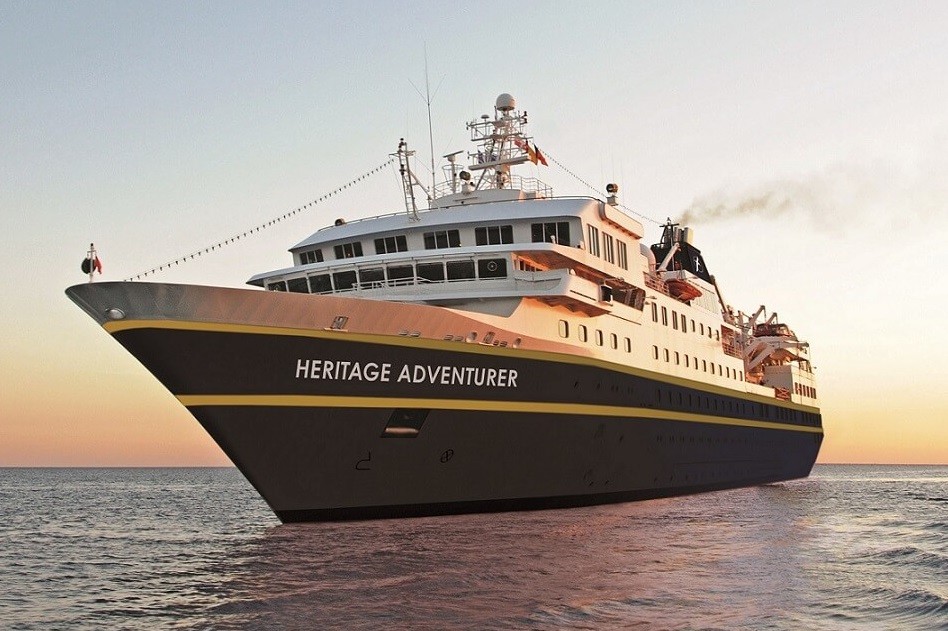
This ship was built in 1991 and was originally named the Hanseatic, a pioneer in long-distance polar voyages, before being acquired by a Canadian operator and renamed the Resolute, sailing in the waters of Northern Canada and Nunavut as well as in Antarctica during the winter. Heritage Expeditions now operates it following a complete renovation.
The ship, which is 123 meters long and 18 meters wide, traveling at 14 knots, is designed for long voyages and particularly well-suited for East Antarctica, with its ocean crossings between the sub-Antarctic islands and navigation through pack ice.
It features spacious outdoor decks, two restaurants, bars, a shop, and a conference and performance hall, with particularly spacious cabins ranging from 22 to 35 m². It has a fleet of 14 Zodiacs. In the summer, this ship will sail between Kamchatka and Wrangel Island.
PRICE PER PERSON
- Triple cabins on the main deck: €31,935
- Superior triple cabins: €33,100
- Superior double cabins on Deck 4: €35,250
- Superior double cabins on Deck 5: €36,475
- Worsley Suites: €43,950
- Heritage Suites: €63,600
- Single cabins: €43,450
- Superior Single Cabins: €44,700
Prices include:
- Disembarkation fees
- Transfers before and after the cruise
- One night’s hotel stay in a double room (dinner and breakfast included)
- Accommodations aboard the ship on a full-board basis
- Beer, wine, and non-alcoholic beverages served at lunch and dinner
- All shore excursions and activities.
- Lecture series led by expert naturalists
- Assistance and repatriation insurance
Prices do not include:
- International and domestic flights
- Personal extras
- Laundry
- Tips
- Beverages (except those included)
- Visa fees
- Comprehensive insurance
- Kayaking excursion
Exchange rates
The price may be adjusted upward based on the exchange rate at the time the balance is due, as well as fuel and kerosene prices. However, the increase cannot exceed 8% of the price.
We will send all those interested in this trip more information about the itinerary, logistical details, possible extensions in New Zealand, and flight arrangements.

Discover our world through our online magazine.
Polar news, in-depth articles on wildlife, and many other fascinating topics.
All our articles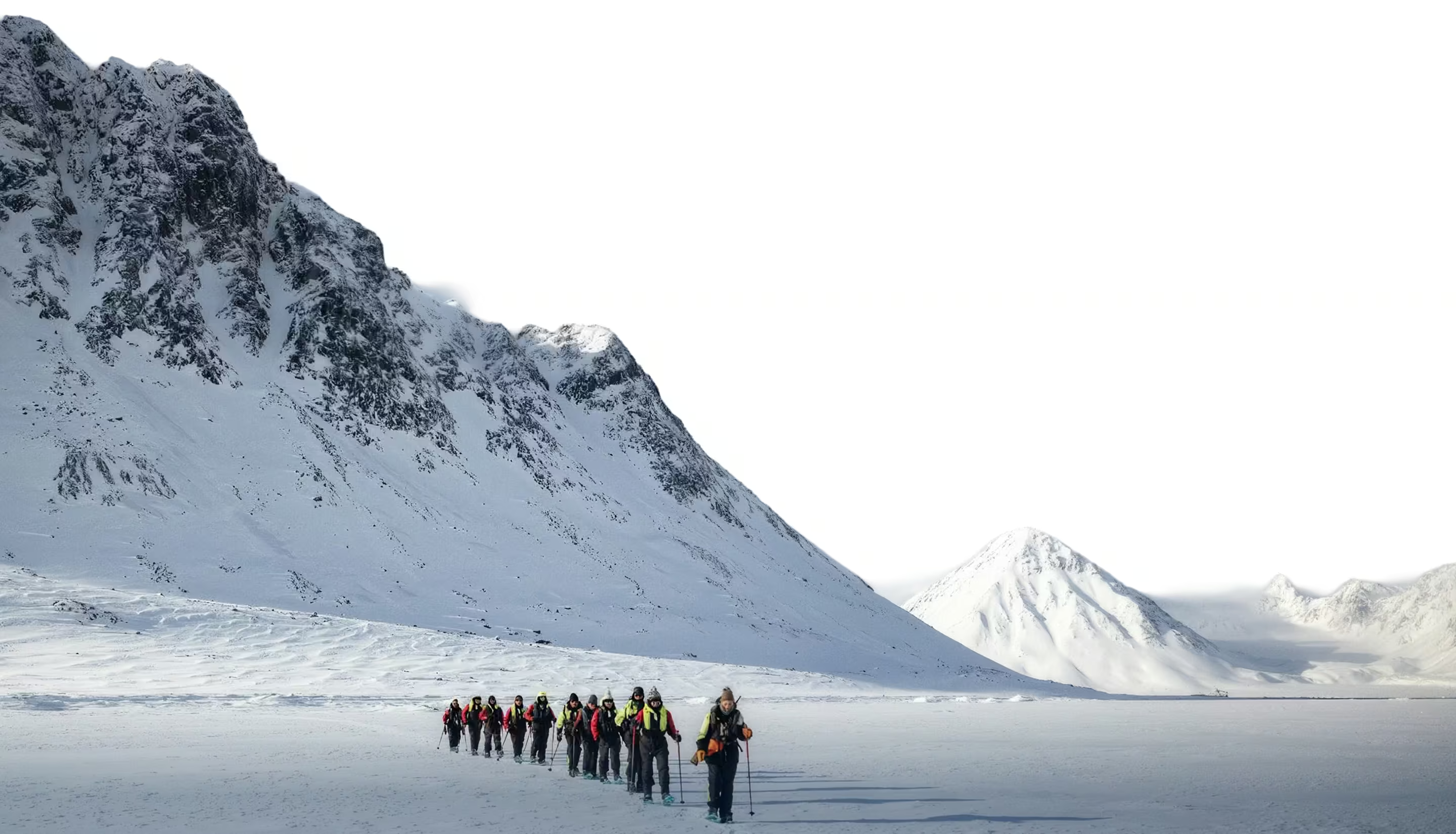
Grands Espaces is a member of


Tour Operator License in France IM02117002 and in Switzerland CH-626.4.004.351-6 © GRANDS ESPACES SARL